

IELTS Preparation: Understanding the Test Format and Scoring Bands
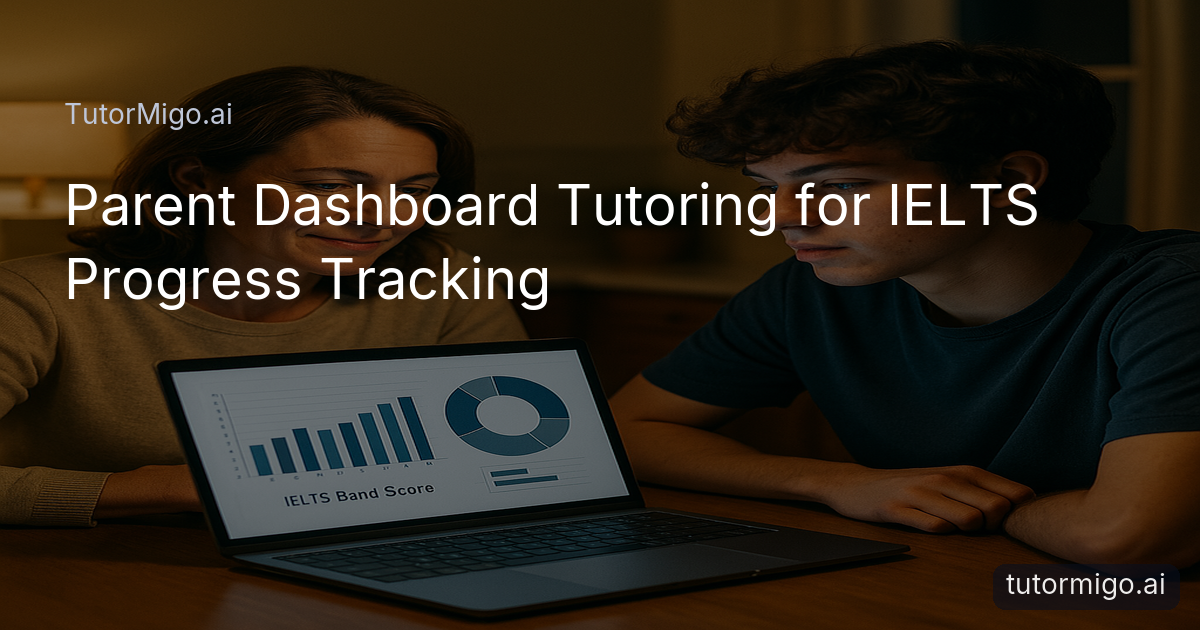
Keeping an eye on your child's IELTS preparation can be challenging when they're using an AI Tutor for practice. You want to know if they're improving in the key skills without hovering over every session. Parent dashboard tutoring gives you the insights needed to support them effectively.
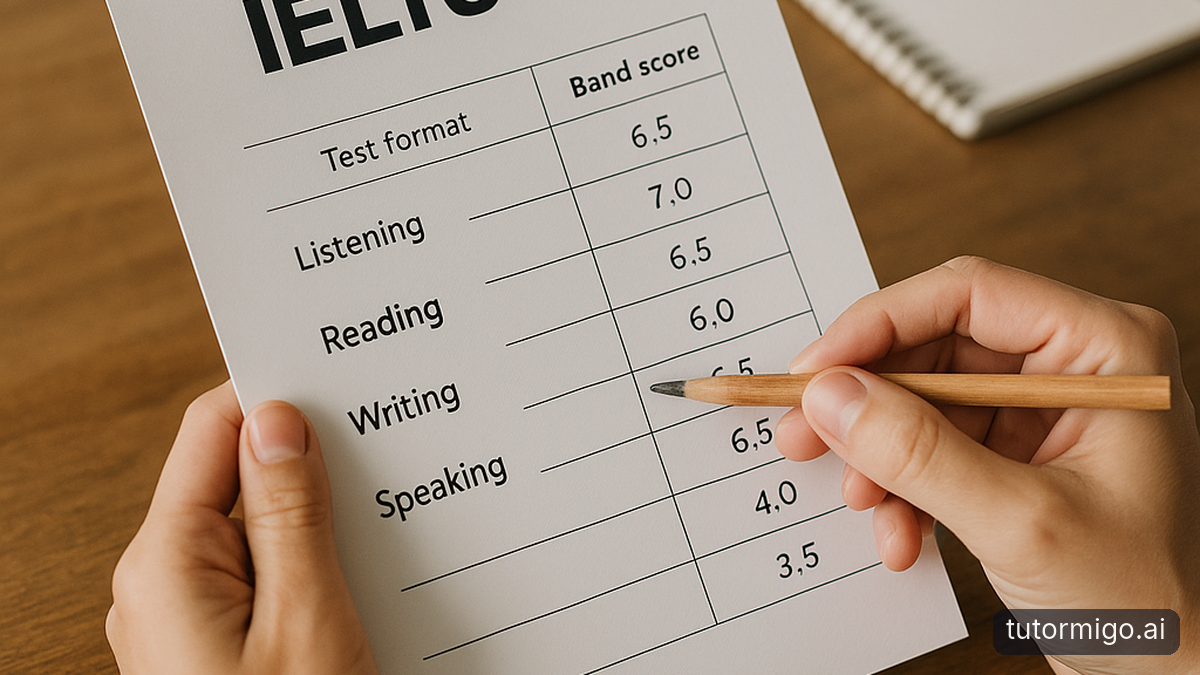
The IELTS test is divided into four sections with specific formats. Listening has 40 questions from recordings in 30 minutes. Reading covers three passages in 60 minutes. Writing requires two tasks in 60 minutes, and speaking is an 11-14 minute interview.
Band scores from 0 to 9 are given per skill with the overall as the average. For example, a child with 7.0 listening, 6.0 reading, 5.5 writing and 6.5 speaking gets an overall of 6.25 rounded to 6.5. This breakdown is key for setting goals in IELTS preparation.
Through exam preparation tools you review mock test reports to see where support is needed. If writing is low, focus there using the AI Tutor for feedback on structure and ideas.
Tip: Use band descriptors to understand what improvements mean for each skill level.Monitoring Progress in Listening and Reading Skills
Listening and reading form the receptive skills in IELTS preparation, and monitoring them involves looking at accuracy rates and question type performance. In listening, pay attention to how your child handles different accents and the ability to follow instructions precisely. Practice tests reveal if they miss key details in the recordings.
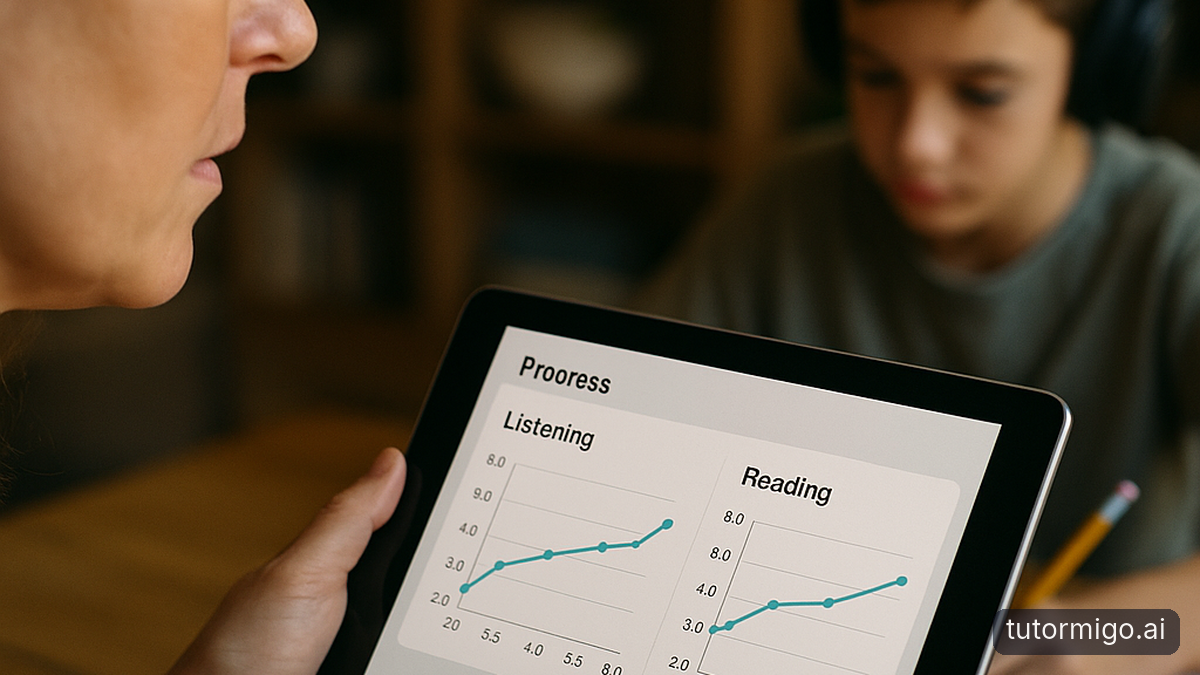
For reading, track time spent on passages and success with skimming and scanning techniques. Common issues include misunderstanding true false not given questions or struggling with vocabulary in context. The parent dashboard tutoring allows you to see graphs of improvement over multiple sessions.
Consider a scenario where your child completes several listening mocks. Initially they get 22 out of 40 correct, equating to band 5.5. After targeted practice, they reach 30 correct for band 7. You can celebrate the progress and note which question types still need work.
Reading practice often shows patterns like lower scores on the third passage which is harder. Use this insight to suggest more timed reading exercises. Reviewing these patterns regularly helps in adjusting the approach. For more on building daily habits, see our guide to smarter daily studying.
Tip: Set weekly goals for listening and reading, such as completing two full sections, and review the results together to maintain motivation.Tracking Improvements in Writing and Speaking
Writing and speaking are productive skills that require detailed feedback for improvement in IELTS preparation. In writing, monitor the two tasks separately: task one for data description and task two for essay. Look for feedback on coherence, lexical resource, grammatical range, and task response.
Speaking feedback covers fluency and coherence, lexical resource, grammatical range and accuracy, and pronunciation. Your child might excel in fluency but need work on pronunciation. The progress tracking shows band estimates from practice recordings or written submissions.
Imagine your child submits a writing task two essay on a common topic like technology. The initial feedback points out lack of examples and simple sentences, scoring around 5.5. After revisions guided by the AI Tutor, the next attempt reaches 6.5 with better structure and vocabulary.
For speaking, review recordings of mock interviews. If your child pauses too much or uses repetitive words, suggest practicing with varied topics. Consistent review helps spot these trends early.
Tip: Encourage recording speaking practice and submitting for AI feedback to get objective band estimates and specific improvement suggestions.Building a Personalized Study Plan for IELTS Success
Creating a study plan tailored to your child's needs is essential for effective IELTS preparation. Start by assessing current band levels in each skill using mock tests. Allocate more time to weaker areas while maintaining practice in stronger ones to keep balance.
A typical plan might include daily listening for 30 minutes, reading for 45 minutes, writing one task every other day, and speaking practice twice a week. Include rest days and review sessions. The exam preparation tools on the platform help structure this with suggested activities.
For example, if reading is at 5.5 and others at 6.5, dedicate extra sessions to reading strategies like identifying main ideas quickly. Use spaced repetition for vocabulary building relevant to common IELTS topics such as environment or education.
Review the plan weekly based on progress data. If writing is not improving, adjust by adding more practice and feedback loops. Check out our 8-week study plan for IELTS success for a sample structure you can adapt.
Tip: Make the study plan flexible and involve your child in setting it to increase their commitment to the IELTS preparation routine.Spotting and Fixing Common IELTS Mistakes
Many students repeat similar errors in IELTS preparation that can be caught early with good monitoring. In listening, a frequent mistake is not reading questions before the audio starts, leading to missed answers. Reading errors often involve failing to check the word limit or misinterpreting paraphrased information.
Writing mistakes include not fully addressing the task, such as only describing one part of a graph, or using informal language in essays. Speaking problems like giving memorized answers or not expanding on points lower the band significantly.
Suppose your child keeps making the same grammar error in writing tasks, like subject verb agreement. The progress report highlights this pattern across submissions. You can then focus correction on that by reviewing rules together or using targeted exercises.
Fixing involves analyzing the error, understanding why it happened, and practicing the correct form. Regular checks in the dashboard show if the mistake rate is decreasing over time.
Tip: After each mock test, have your child list three mistakes and one way to fix each before the next practice session.How Parent Dashboard Tutoring Keeps You Informed on IELTS Progress
Parent dashboard tutoring provides a clear overview of your child's activity and results in their IELTS preparation. You can view session history from the AI Tutor, including time spent on different skills and recent band estimates from practice. This helps you stay involved without needing to sit through every lesson.
Progress graphs show trends over weeks, highlighting improvements or plateaus in listening, reading, writing, and speaking. For instance, you might see speaking bands rising after regular mock interviews but writing staying steady, prompting a conversation about adding more essay practice.
Access to detailed reports lets you identify when your child is ready for the real test. If all skills are at or above the target band consistently in mocks, it is a good sign. You can also see which features like flashcards or interactive tools they are using most.
Communicate with your child about the data you see. Ask what they found challenging in recent sessions and offer encouragement based on the positive trends. This collaborative approach makes the IELTS preparation journey smoother for everyone involved.
With these insights from parent dashboard tutoring, you can support your child confidently. Try TutorMigo.ai for free to explore the monitoring options and help them achieve their target IELTS band score.
Frequently asked questions
Use the parent dashboard tutoring to view scores from practice tests and see which question types they struggle with most. Look for trends in accuracy over time and discuss specific recordings with them.
A balanced plan covers all four skills daily or weekly with time for review. Focus extra on weak areas identified through monitoring. Include mock tests every two weeks to measure progress accurately.
The AI Tutor provides instant feedback on practice responses, explains mistakes, and offers personalized exercises. It simulates speaking interviews and reviews writing for band level improvements.
Check weekly to stay updated without overwhelming your child. Use the insights to have supportive conversations about their IELTS preparation rather than pressuring them.
Explore TutorMigo
Enjoyed this read?
Like, share, or comment below.


Comments
0Sign in required · respectful discussion · replies supported
Loading comments…