

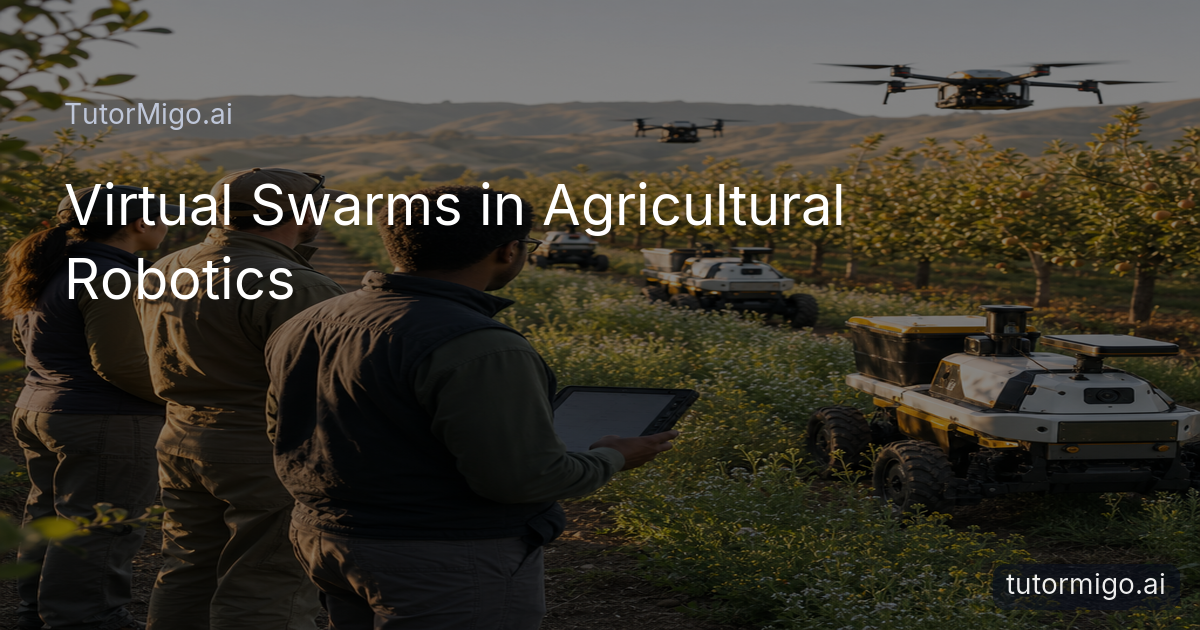
Why Agricultural Robotics Need Virtual Swarms
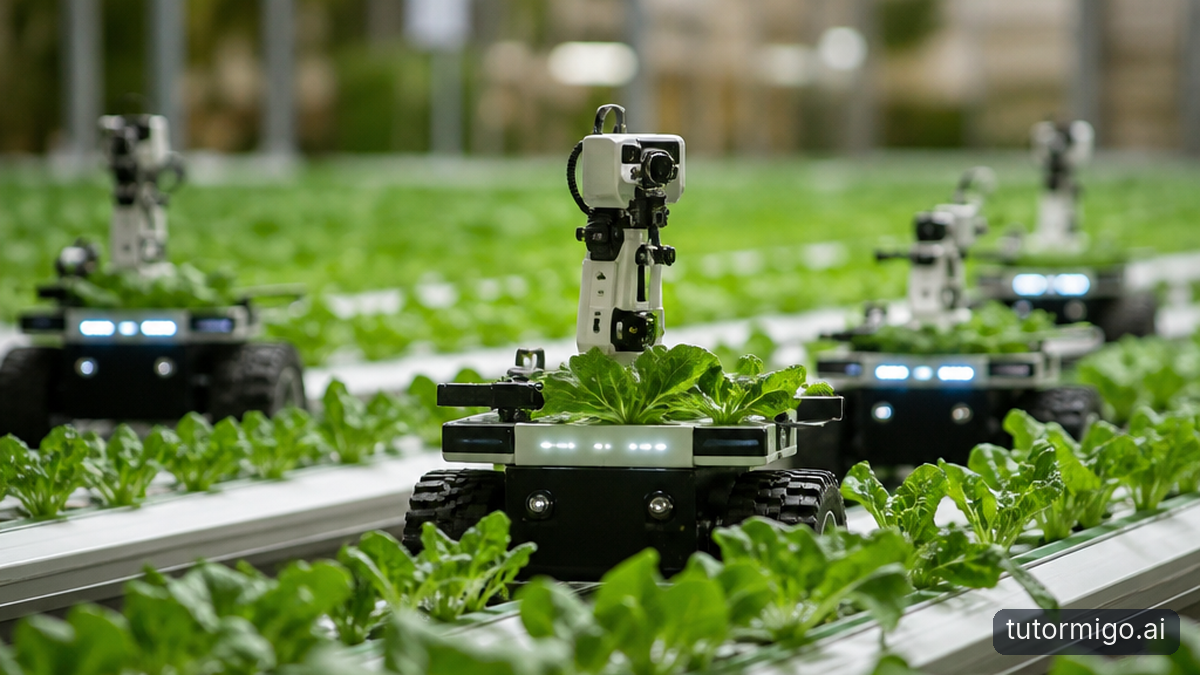
When a single agricultural robot fails, you may be able to stop it, inspect the problem, and try again. A fleet is different. Several weeding robots can block one another in narrow rows, a seeding machine can miss a route after another vehicle changes the soil conditions, and a harvesting drone can enter an area where a ground robot is already working. Testing every combination in a real field is slow, expensive, and sometimes unsafe.
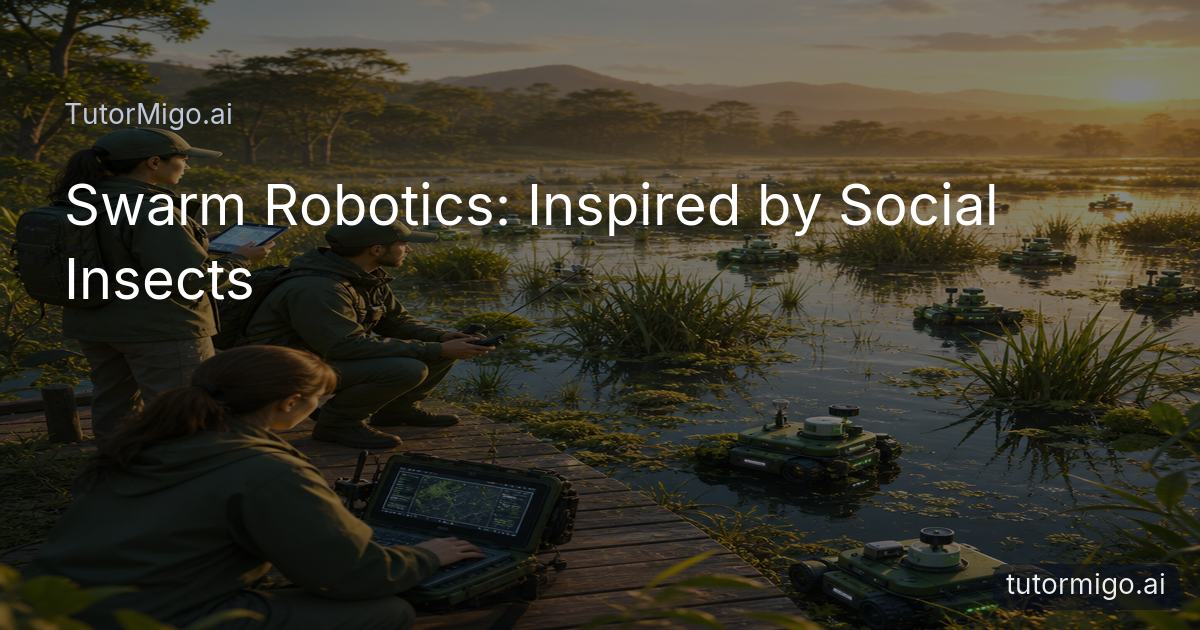
That is where virtual swarms: agent-based modeling becomes useful. Engineers represent each robot as an autonomous agent with its own position, sensors, battery state, speed, task, and decision rules. The surrounding orchard or field becomes a simulated environment containing plants, soil, slopes, obstacles, weather, and boundaries. Hundreds of runs can then reveal patterns that a single demonstration would miss.
The goal is not to make a computer animation that looks impressive. It is to answer operational questions before deployment: How many robots can share a block without congestion? What happens if one vehicle loses its map? Can a drone reroute when wind changes? A good swarm model turns those questions into repeatable experiments, giving engineers evidence for fleet design rather than relying on intuition.
Building the field and the agents
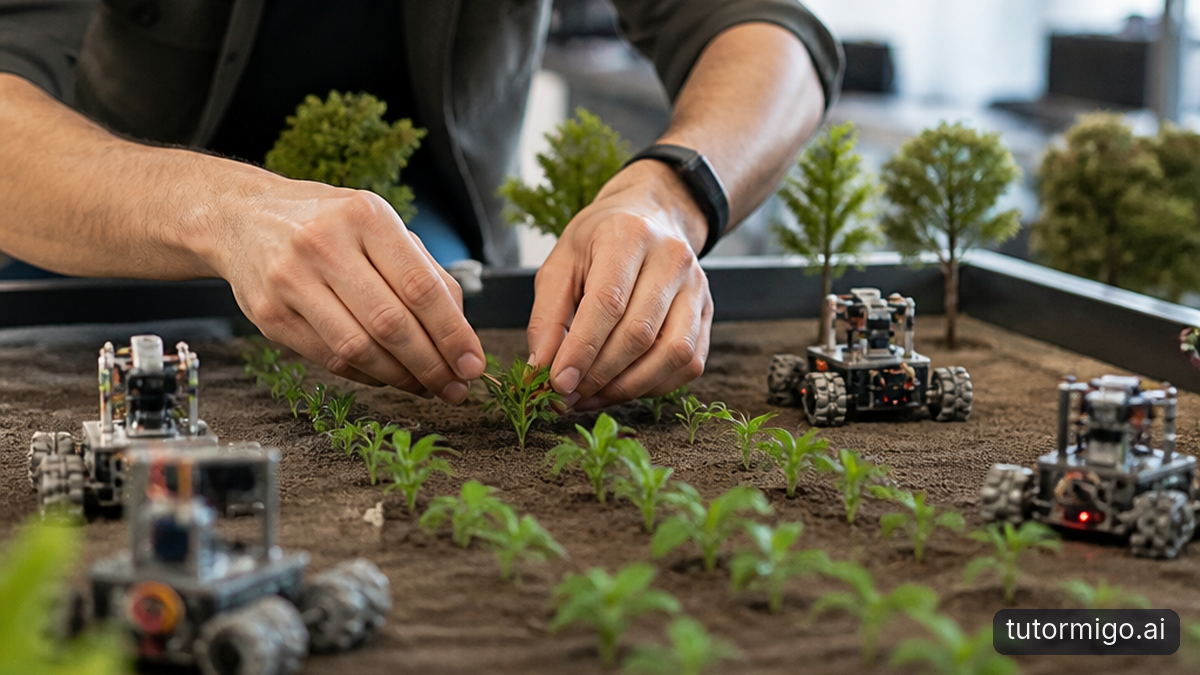
A useful simulation begins with a credible environment. In an orchard, engineers may model tree spacing, row width, terrain variation, irrigation equipment, fallen branches, and the locations where fruit or weeds are expected. In an open field, they may add crop rows, headlands for turning, muddy patches, fences, and access roads. The environment needs enough detail to expose real constraints without becoming so complex that experiments are difficult to interpret.
Each agent receives a role and a limited view of the world. A weeding robot might use a camera and positioning data to identify crop rows, while a harvesting drone may estimate plant height and fruit location from an aerial view. The model can include rules for local decisions: keep a safe distance, yield at an intersection, claim the nearest unassigned row, return to a charging point, or request help when confidence falls.
Gazebo is often used with robotics middleware to test sensors, control systems, and robot behavior in interactive worlds. NVIDIA Isaac Sim provides another route, with tools for photorealistic scenes, synthetic sensor data, and large-scale experiments. The platform matters less than the discipline of matching the simulated robot’s assumptions to the hardware that will operate outdoors.
Teaching a fleet to divide the work
A swarm becomes useful when agents can coordinate without a human assigning every movement. In a virtual field, engineers can compare centralized and decentralized strategies. A central planner might divide the farm into zones and send routes to every machine. A decentralized approach lets each robot make local decisions based on nearby agents, task availability, and shared status information. The first can be easier to control; the second may continue working when communication is intermittent.
Consider a 40-hectare orchard with a mix of inspection, mowing, and harvesting tasks. A planner could assign one robot to each row, but that simple arrangement may leave some machines idle while others face dense growth or a longer route around an obstacle. A market-style task system can let robots bid for jobs according to travel distance, battery level, and current workload. Simulation lets engineers test whether that extra flexibility reduces idle time or merely creates more communication overhead.
You should measure more than total coverage. Useful metrics include time to complete a task, distance traveled, energy consumed, unvisited crop area, route conflicts, emergency stops, and the number of messages exchanged. A policy that finishes quickly but creates frequent near-collisions is not an improvement. The strongest design balances productivity with safety, resilience, and predictable behavior.
Testing failure, weather, and uncertainty
Real fields are variable, so a swarm model should deliberately make conditions difficult. Engineers can remove a robot from the fleet, delay its messages, degrade a camera, shift the map, or place an unexpected obstacle in a route. They can also vary sunlight, dust, rain, wind, soil traction, and crop density. These tests show whether the fleet has graceful fallback behavior or whether one small fault causes a chain reaction.
For example, imagine three seeding robots working after heavy rain. One begins slipping on a slope and reports unreliable position data. A robust policy might reduce its speed, mark the affected area as uncertain, and transfer the remaining rows to nearby agents. A brittle policy may continue issuing outdated route commands, leaving gaps in the field or sending another robot into the same muddy patch. Running that scenario repeatedly helps engineers compare recovery strategies under controlled conditions.
Random variation is important, but it should be structured. If every run changes at once, you may not know what caused the result. Start with one factor, such as message delay, then combine it with terrain or sensor noise after the fleet shows stable behavior. Record the conditions for every run so that a promising result can be reproduced rather than treated as a lucky outcome.
From simulated success to real rows
A robot that performs well in simulation can still fail outdoors. Simulated cameras may be cleaner than real cameras, plant shapes may be too regular, and wheel slip may be underestimated. This gap between virtual and physical behavior is why simulation should guide field tests, not replace them. Engineers typically move from simple scenarios to hardware-in-the-loop tests, controlled outdoor trials, and progressively larger deployments.
One practical technique is domain randomization: vary textures, lighting, plant appearance, sensor noise, and small terrain features so the controller does not depend on one perfect virtual scene. Another is calibration. Measure how quickly a real robot turns, how far it slides on damp soil, how its positioning system behaves beneath tree cover, and how long a battery lasts under load. Feed those measurements back into the model.
The comparison should use the same operational metrics in both environments. If the virtual fleet reports strong coverage but the real fleet misses crop rows, examine the assumption behind perception or localization rather than simply tuning the route planner. Keep a safety operator involved during early tests, establish geofences and stop procedures, and expand the operating area only after the fleet behaves predictably in smaller sections.
A practical workflow for virtual swarm design
Start with one task, one robot type, and a small representative area. If you are designing a weeding fleet, model a handful of crop rows and include the turns, obstacles, and weeds that make navigation difficult. Define success before running experiments: perhaps the fleet must cover a target percentage of rows, avoid contact, and return with enough battery for a safe stop. Clear measures prevent a visually convincing simulation from being mistaken for a useful one.
Next, add agents gradually. Compare one robot with two, then with a larger group, while tracking congestion and communication load. Introduce a failure at a known time and inspect the response. Save the scenario, random seed, software version, model parameters, and outcome for each run. Reproducibility is essential when a change in fleet behavior could come from the algorithm, the environment, or the simulator itself.
Finally, select a small set of policies for physical testing. Choose scenarios that represent normal work and credible edge cases, not only the easiest routes. A good next step may be a short orchard block with a safety operator, one recovery test, and a direct comparison between simulated and measured results. Virtual swarms are most valuable when they narrow the field-test questions and expose unsafe assumptions before machines share real ground.
Frequently asked questions
It is a simulation approach in which each robot is represented as an autonomous agent with its own state, sensors, goals, and decision rules. Engineers observe how many agents interact in a shared field or orchard.
Gazebo and NVIDIA Isaac Sim are commonly used options for building virtual environments, connecting robot software, and testing sensors, navigation, and coordination. The best choice depends on the hardware, middleware, graphics needs, and experiment scale.
Useful measures include task completion time, crop or field coverage, energy use, route conflicts, emergency stops, communication load, recovery after failures, and the consistency of results across repeated runs.
No. Simulation can expose coordination problems and unsafe edge cases efficiently, but outdoor tests are still needed to validate perception, localization, traction, weather response, battery performance, and safe behavior around real crops and equipment.
Related reading
Related reading
Enjoyed this read?
Like, share, or comment below.
Comments
0Sign in required · respectful discussion · replies supported
Loading comments…