

Personalized learning when explanations aren't helping

Your child understands a topic at the kitchen table, then freezes when the worksheet appears. Or homework takes an hour even though they can explain the answers aloud. Every child needs a learning approach that fits their current knowledge, challenges, and confidence—not simply more time doing the same thing.
A better fit does not mean making everything easy or designing an entirely separate curriculum. It means identifying what is getting in the way and adjusting the support. A child who struggles to begin may need the first instruction clarified. A child who finishes quickly may need a deeper question rather than another page of familiar work.
Imagine your child can retell a story clearly but writes only one sentence about it. More reading practice may not address the difficulty. They might need help planning their ideas, spelling unfamiliar words, or managing the effort of handwriting. Each possibility suggests a different response, so noticing the specific barrier matters more than choosing a fashionable teaching method.
Start by replacing “Why won't you do this?” with “Which part feels difficult?” Then watch what happens when you change one thing. You are not trying to remove every struggle. You are trying to make the struggle productive: challenging enough to encourage growth, but supported enough that your child can take the next step.
Look for the need behind the behavior
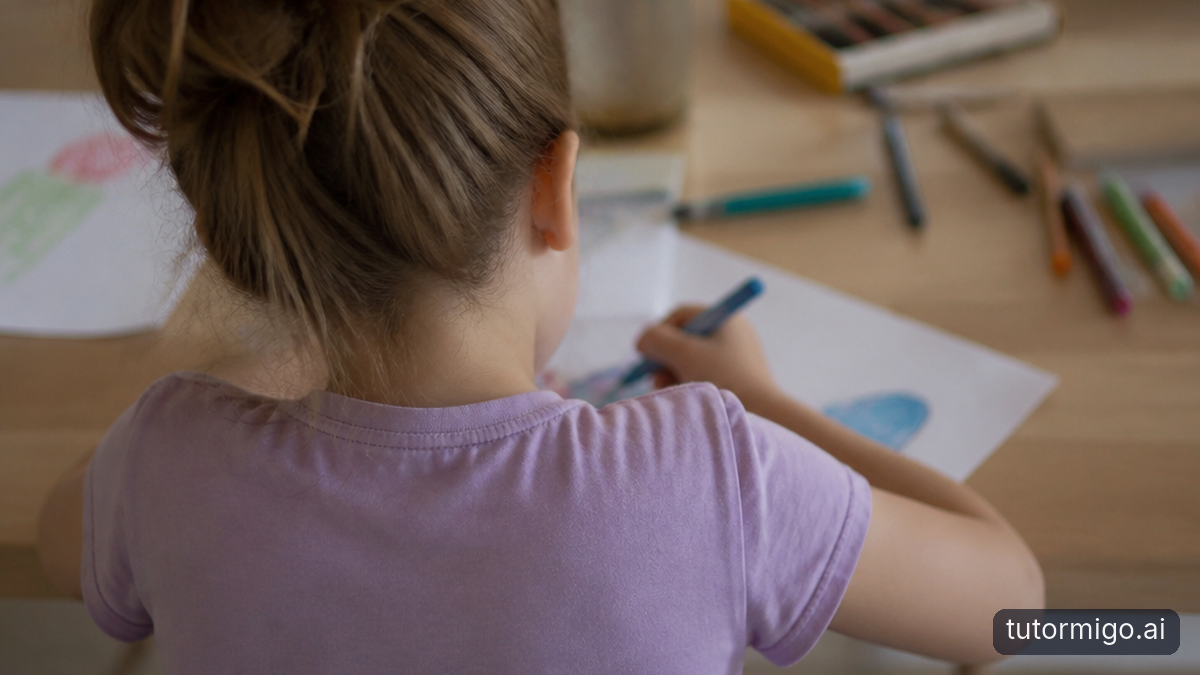
“Distracted,” “careless,” and “unmotivated” describe what you see, but they do not explain why it happens. Before choosing a solution, observe a few ordinary learning sessions. Notice when your child starts hesitating, what they can do independently, and whether the difficulty changes with the task, time of day, or environment.
For example, a child who repeatedly leaves the table during reading might be avoiding words they cannot decode. Another might understand the passage but lose track of a long instruction. A third might simply be exhausted after a demanding day. These situations can look similar from across the room, yet extra reminders to concentrate may help none of them.
Check the foundations, too. Ask your child to explain a familiar example before tackling a harder one. If a new lesson assumes knowledge they have not secured, slowing down briefly can prevent repeated frustration. Understanding how prior knowledge shapes learning helps you distinguish a missing building block from a lack of effort.
Keep your observations simple: the task, the sticking point, and what helped. You might record that your child completed a short instruction independently but needed a longer one broken into parts. A few specific notes are more useful than a broad conclusion that they are “bad at homework.”
Adapt the method without assigning a learning label
Children have preferences, but a preference is not a permanent rule about how they can learn. There is not good evidence that assigning children fixed “visual,” “auditory,” or “kinesthetic” learning styles and matching all teaching to those labels improves learning. A more useful question is: which explanation or activity makes this particular idea clearer?
Choose the approach to suit the content. When your child is learning about plant growth, observing a seedling can make changes concrete. A labeled diagram can show its parts, while a conversation helps them explain what each part does. These methods complement one another; you do not need to decide that your child belongs to one category.
Adjust how much information arrives at once, too. If a page feels overwhelming, cover the questions you are not using. If an explanation is too abstract, demonstrate one example with familiar objects. If your child already understands the basics, ask them to compare approaches or explain why an answer makes sense rather than repeating easy practice.
Offer a small choice within a clear goal: “Would you like to talk through your plan or sketch it first?” Both routes lead toward the same learning. Choice gives your child some control without asking them to design the whole lesson, and it helps you discover what support is useful today.
Keep the challenge, but make support temporary
An approach that fits should help your child become more capable, not more dependent on an adult. Start with enough support to make progress possible, then gradually step back. You might demonstrate a task, complete a similar example together, and invite your child to attempt the next one while you remain available.
Suppose your child struggles to organize a written response. First, model how to choose a main point and find a supporting detail. Next, ask questions while they create their own plan. Later, leave a brief reminder nearby instead of supplying the plan yourself. The aim is for your child to use the process without needing you to direct every decision.
Feedback works best when it identifies something they can change. “This is messy” offers little direction. “Your ideas are clear; now check where each sentence ends” gives a manageable next step. Ask your child to act on that feedback rather than hearing several corrections at once. One useful revision can teach more than a page covered in comments.
Notice growing independence as well as correct answers. Starting without a reminder, choosing a helpful tool, or recognizing an error are meaningful signs of progress. For more ways to support that shift, explore helping your child become an independent learner.
Measure progress without making learning a daily test
You need some evidence that an adjustment is helping, but constant checking can make learning feel like a performance. Choose one specific goal and look for a small change over several sessions. Instead of “get better at reading,” try noticing whether your child can explain the main event after reading a short passage.
Compare your child with their own earlier work rather than with a sibling or classmate. Keep an occasional sample, or note how much prompting a task required. A correct answer produced after extensive adult help tells a different story from an answer your child can explain and produce independently. Both accuracy and independence deserve attention.
Ask how the experience felt, too. “What helped you get unstuck?” is often more revealing than “Was that easy?” Your child might identify a quieter space, a worked example, or a chance to rehearse aloud. Confidence matters alongside performance, especially if earlier struggles have made them reluctant to try. You can find further guidance on building your child's learning confidence.
Share specific observations with their teacher when difficulties persist. Describe what you have tried and what happened, rather than requesting a particular label. If difficulties continue despite appropriate support, ask whether further assessment would help clarify your child's needs. Tailoring everyday learning should complement professional support, not delay it.
Start with one useful change
You do not need to rebuild your child's entire routine this week. Choose one recurring difficulty: getting started, understanding instructions, remembering material, or explaining an answer. Ask your child what they notice, then agree on one adjustment you can try together. Keep the learning goal clear so you can tell whether the adjustment helps.
If getting started is the problem, spend a few minutes reading the task together and identifying the first action. Then step away while your child attempts it. After several sessions, check whether they begin with less help. If nothing improves, reconsider the barrier rather than simply increasing the pressure or adding more practice.
Keep whatever works, and change what does not. Your child's needs will shift as their knowledge, responsibilities, and confidence grow. A well-fitting approach is not a permanent prescription; it is a habit of noticing, responding, and gradually handing over responsibility. That habit makes support both more effective and easier to sustain.
If you want a place to review progress alongside these conversations, TutorMigo.ai's Parent Dashboard offers visibility into your child's progress and co-learning features. Use that information as a starting point for discussion, not a substitute for listening to your child.
Frequently asked questions
No. Children can work toward shared learning goals while receiving different explanations, levels of support, pacing, or practice. Start with the smallest adjustment that addresses the actual difficulty.
Ask your child to explain the task and attempt a familiar example. If they cannot identify a starting point, clarify instructions or check prerequisite knowledge. If they understand but hesitate, a manageable first step may help.
Focus on what helps with the specific task rather than assigning a fixed learning-style label. Combine explanations, examples, discussion, and practice as appropriate, then check what your child can do independently.
Speak with your child's teacher when difficulties persist, distress increases, or everyday adjustments do not help. Share concrete examples and ask whether targeted support or further assessment is appropriate.
Enjoyed this read?
Like, share, or comment below.



Comments
0Sign in required · respectful discussion · replies supported
Loading comments…