


Student confidence: Why children hesitate to ask questions

Your child comes home confused but says they couldn't ask the teacher. Start by listening without criticism, then practice one small question together. Children afraid to ask questions need reassurance, manageable opportunities to speak, and another place to explore uncertainty—not pressure to become the loudest person in the room.
Sometimes the obstacle is fear of embarrassment. Your child may worry that classmates will laugh, that the teacher has already explained the answer, or that asking will reveal something everyone else understands. A single impatient response can make a question feel risky, even when nobody intended lasting harm.
Other children doubt their academic abilities. They might say, “I'm just bad at this,” when the actual difficulty is one unfamiliar term or a missed instruction. Some need more time to organize a question than a fast-moving lesson allows. Silence alone doesn't tell you which explanation fits.
Ask about a specific moment: “When you got stuck today, what made it hard to ask?” Then listen before offering solutions. If your child says, “Everyone would think I'm stupid,” try, “That sounds uncomfortable. What would make asking feel a little easier?” You are learning what support they need, not arguing them out of their experience.
How to build confidence in students at home
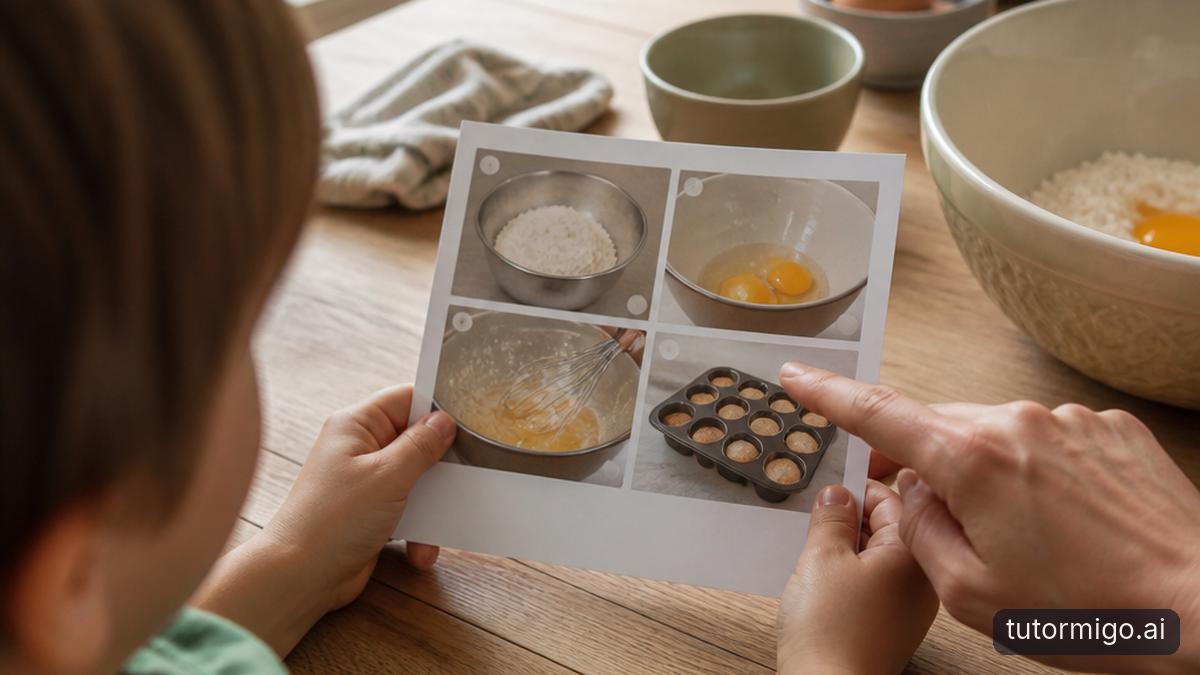
If you're wondering how to build confidence in students, start with your response to uncertainty. When your child asks something you consider obvious, avoid “You should know that.” Try, “Let's find the part that doesn't make sense.” That keeps the conversation focused on understanding rather than judging ability.
Make curiosity visible in ordinary moments. While following a recipe, you might say, “I wonder why this needs to rest before baking.” You don't need to turn every activity into a lesson. Simply show that capable adults ask questions, check explanations, and sometimes change their minds.
Practice question starters using real schoolwork: “What does this word mean here?” “Why did you choose that step?” or “Could you show another example?” Let your child choose one that sounds natural. Rehearsing a sentence at home can make it more familiar when they need it elsewhere.
Notice specific actions rather than giving broad labels. “You asked which instruction to follow, and then you could start” is more useful than “You're a genius.” For another practical approach, explore building learning confidence one problem at a time. The goal is not instant boldness. It is helping your child recognize that they have ways to move forward when learning gets difficult.
Work with the teacher to make questions feel safer
A safe learning environment is one where confusion can be expressed without ridicule or unnecessary attention. You can help create that atmosphere at home, but classroom routines matter too. Contact the teacher with a concrete observation: “My child understands parts of the homework but says they worry about asking during lessons.”
Ask what the teacher notices and what options already exist. Your child might be able to ask during independent work, write a question on paper, or check an instruction briefly after class. These are possible arrangements to discuss, not services every classroom necessarily offers.
Include your child in choosing the approach. A parent announcing the problem publicly could create the attention they hoped to avoid. Ask, “Would you like me to email your teacher, or should we write down what you want to say first?” Agree on what you will share.
Start with a manageable goal, such as asking one clarification privately, rather than insisting on speaking before the whole class. Later, ask whether the arrangement helped. If classmates are mocking questions or an adult repeatedly dismisses them, raise the specific behavior with the school. Your child should not have to solve an unwelcoming environment simply by becoming more confident.
Show why asking questions helps understanding
Children may think asking a question is an admission that they weren't listening. Explain that questions help identify what is missing. “I don't understand anything” is difficult to act on; “I don't understand why the character changed her mind” gives you a clear place to begin.
Try a short homework conversation. Ask your child to explain what they already understand, then point to the first confusing part. If a science passage describes evaporation, they might know that water changes form but wonder where it goes. That question reveals a useful distinction between remembering a word and understanding the process.
After exploring the answer, invite them to explain it in their own words or apply it to a different example. “How does that help explain a puddle drying?” is more informative than “Do you get it now?” If the explanation still feels shaky, another question is a reasonable next step.
Keep the tone collaborative rather than turning every answer into a test. You can say, “Let's see whether that explanation helps.” Over time, these small checks give your child concrete evidence that asking can move learning forward. Student learning confidence has somewhere practical to grow when a question leads to a clearer next action.
Give questions another home with personalized AI support
Sometimes your child wants to explore a question without classmates watching or a lesson moving on. TutorMigo.ai is an AI-powered learning companion with a personalized tutoring workspace where students can ask questions and explore topics interactively. An AI Tutor can offer another setting for practicing questions, alongside classroom teaching and conversations at home.
For example, your child might type, “I understand the definition of evaporation, but not where the water goes. Explain it with an everyday example.” They can then ask, “How is that different from boiling?” Personalized learning becomes useful when the conversation addresses the actual point of confusion rather than simply supplying a finished homework answer.
Among the relevant TutorMigo benefits is session history in the AI Tutor Workspace. Your child can revisit an earlier exchange, find an explanation, and identify what they still want to ask. This supports continuity without assuming that every new conversation automatically remembers everything.
When choosing an AI tutor for students, consider the study experience around the chat. TutorMigo.ai also offers interactive study tools, including a whiteboard and math step editor. General-purpose chatbots can explain ideas too; compare the workspace and tools your child will actually use. AI responses can be mistaken, so check uncertain answers against class materials or the teacher. An AI Tutor should support questioning, not become an unquestioned authority.
What to do next: choose one small question
Tonight, replace “Did you ask any questions?” with “Was there anything you wanted to understand better?” Let your child choose one example. Together, turn it into a question they could ask at home, in a tutoring conversation, or at school. Keep the first step small enough to feel achievable.
If they explore it with TutorMigo.ai, stay nearby initially and agree on a purpose: understand one confusing idea, not rush through the entire assignment. Ask them afterward, “What became clearer, and what would you still ask your teacher?” This keeps the digital conversation connected to classroom learning.
You can also discuss how you will follow progress without making every interaction feel inspected. TutorMigo.ai's Parent Dashboard provides visibility into child progress, learning controls, and co-learning features. Our guide to following your child's learning progress with AI offers a related starting point. Be open about your involvement and keep conversations focused on useful support.
Success might be a more specific question, a willingness to try again, or one private conversation with the teacher. You don't need to measure it by raised hands alone. When your child is ready, explore TutorMigo.ai together and use one genuine question as the starting point.
Frequently asked questions
They may fear embarrassment, doubt their abilities, need more thinking time, or remember an uncomfortable response. Ask about a specific classroom moment rather than assuming the cause.
Respond calmly to confusion, practice a useful question starter, and recognize specific efforts. Work with the teacher on a manageable way to ask without demanding public participation immediately.
Start by understanding their hesitation. A private clarification or written question may be a more manageable first step. Agree on an approach with your child and their teacher.
An AI tutor offers another setting for questions and follow-ups without classmates present. Check uncertain answers against reliable materials, and use the conversation to support—not replace—communication with teachers.
Look for opportunities to ask follow-up questions, revisit earlier explanations, and work through confusing ideas. TutorMigo.ai offers personalized tutoring chat, session history, interactive study tools, and parent visibility.
Explore TutorMigo
Enjoyed this read?
Like, share, or comment below.


Comments
0Sign in required · respectful discussion · replies supported
Loading comments…