

Tutormigo benefits when preparation takes over your day

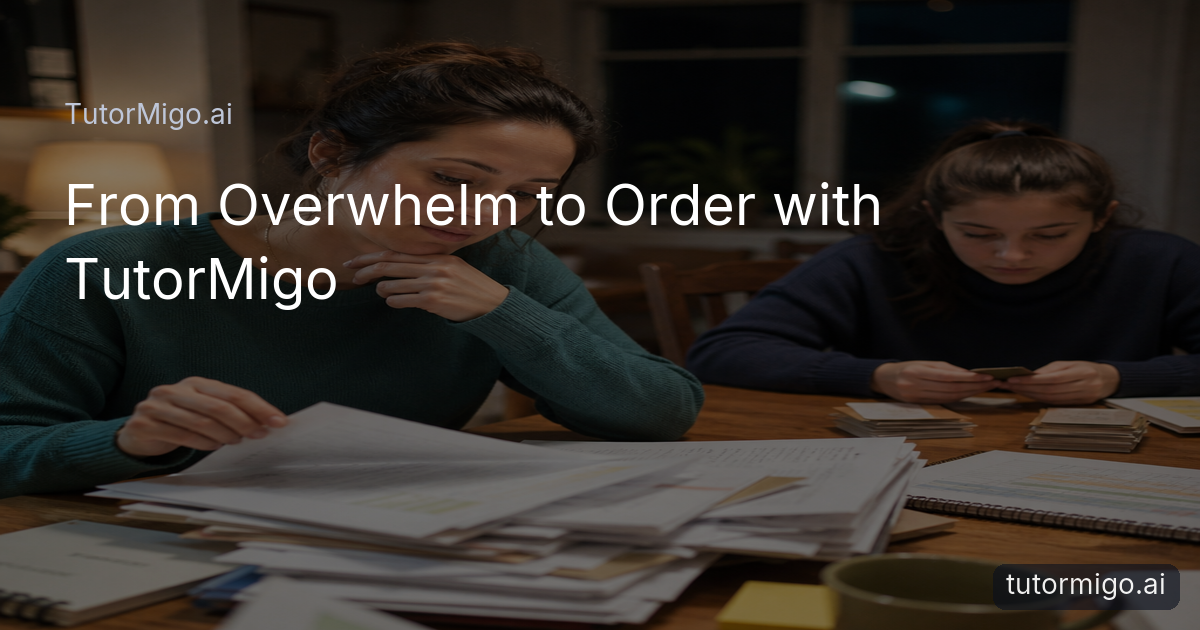
You know the feeling: notes are spread across the table, a student needs help with one difficult topic, and an exam deadline keeps moving closer. Preparation can begin as a responsible habit and slowly become a pile of disconnected tasks. That was the turning point for Maya, a teacher who was spending her evenings switching between lesson ideas, practice questions, revision reminders, and family updates.
Her first improvement was not working longer. It was separating preparation into repeatable stages. She chose one workspace for tutoring conversations, one place for active study, and one routine for checking progress. Instead of asking, “What should I do next?” every night, she began with three questions: What does this learner need now? What should they remember later? How will I know whether the plan is working?
This small shift made the TutorMigo benefits easier to see. A personal AI Tutor could support a continuing conversation, while flashcards and interactive tools gave each session a practical task. The goal was not to replace her judgment. It was to reduce the friction around it so she could spend more attention on explanations, encouragement, and decisions that require a real teacher.
Build one continuous tutoring routine

Maya began each preparation block in the TutorMigo.ai AI Tutor Workspace rather than opening a new general-purpose chat for every question. She could return to a session history, review what had already been discussed, and continue from the learner’s current point. For example, if a student had struggled with a science explanation on Monday, Tuesday’s session could begin by revisiting that difficulty before introducing a new example.
That continuity matters because tutoring is rarely a series of unrelated questions. A learner may first ask for a simple explanation, then need a worked example, then want to test their understanding without being shown the answer. A workspace built for personalized tutoring helps keep those stages connected. Maya could also choose an expert persona suited to the task, while still applying her own knowledge of the student and the lesson goal.
She created a simple session pattern: clarify the goal, explore the concept, practise one problem, and finish with a next step. You can use the same pattern whether you are a teacher preparing support, a parent helping at home, or a student studying independently. If you want more ideas about focused sessions, explore this guide to TutorMigo benefits for focused AI tutoring.
Turn short sessions into lasting recall
Once Maya had a clear tutoring conversation, she needed a way to prevent useful explanations from disappearing. She used TutorMigo.ai flashcards to turn key ideas into short prompts and answers, then relied on spaced-repetition scheduling rather than rereading an entire set every evening. A student who learned ten terms on Tuesday might review the hardest three on Wednesday, revisit the full set later in the week, and return to missed cards again.
This changed the shape of preparation. Instead of cramming before a test, Maya could assign a manageable review task after each session. A learner studying language vocabulary might explain a word, use it in a sentence, and then see it again after a planned interval. A learner revising history might connect a date to an event and explain why the event mattered. The cards became prompts for thinking, not just a list to memorize.
Keep the deck small enough to finish. Five to fifteen useful cards can be more practical than a huge set that remains untouched. You can also read this example of using TutorMigo flashcards for lasting recall when deciding what belongs in a review cycle. The TutorMigo.ai benefits here are consistency, timing, and a clearer bridge between tutoring and independent study.
Match the tool to the task
Maya also stopped treating every learning problem as a chat problem. When a student needed to sketch an idea, she used the whiteboard. When code had to be tested, she used the code sandbox. When a maths solution needed checking line by line, she used the math step editor. The point was not to collect tools. It was to choose a form of practice that matched the kind of thinking the learner needed.
This is one practical difference between a focused learning platform and a general-purpose generative chatbot. A general chatbot may be useful for brainstorming an explanation or asking a quick question, but you may still need to organise the follow-up yourself. In TutorMigo, the workspace, flashcards, and study tools can form a more deliberate sequence: discuss the concept, work with it visibly, then review it later.
For example, a student learning algebra could ask for an explanation, write each step in the math editor, and create flashcards for the rules that caused confusion. A programming student could discuss an error, test a revision in the code sandbox, and record the underlying principle for later recall. Maya found that choosing the right tool made sessions feel less overwhelming because each activity had a clear purpose.
Use exam preparation as a progress loop
Before using a structured plan, Maya treated exam preparation as a long list of topics. That made progress hard to judge. She changed the routine by selecting practice sets, reviewing the results, and using the progress view to decide what deserved the next session. TutorMigo exam preparation supports structured preparation for SAT, ACT, AP, and IELTS, so the workflow can stay connected to the assessment rather than relying only on general revision.
Imagine a learner preparing for the SAT who performs well on one question type but repeatedly loses time on another. The next study block should not simply repeat the whole subject. It should target the weaker area, include a short practice set, and end with a review of the mistake pattern. The same principle can help with ACT, AP, or IELTS preparation: use evidence from practice to choose the next action.
Maya kept the loop simple: complete a set, inspect the result, discuss the difficult questions with the AI Tutor, and schedule a short follow-up review. This made improvement visible without turning every evening into a full mock exam. You can also read about TutorMigo benefits for student learning if you want to connect progress tracking with better learning habits.
Make progress visible without adding pressure
The final change was sharing the right amount of information with the adults supporting the learner. Maya used teacher visibility to monitor class progress, identify students who needed a different assignment, and review reports without asking every learner to explain their entire study history. A parent could use the Parent Dashboard to see progress and learning activity, then start a constructive conversation instead of asking a vague question such as, “Did you study today?”
Visibility works best when it leads to a specific next step. If a student has completed several flashcard reviews but is still struggling with one topic, a teacher might recommend an interactive practice task. If a parent sees steady work but uneven results, they might ask which part feels confusing and arrange a short co-learning session. The dashboard should support encouragement and decisions, not surveillance.
Maya’s weekly check took ten minutes. She looked for completed practice, repeated difficulty, and the next planned action. Students still owned their learning, while teachers and parents had enough context to offer useful support. After a month, preparation felt calmer because she was no longer trying to remember everything herself. She had a workflow that connected tutoring, practice, recall, exam progress, and communication.
“The biggest change was not having more hours. It was knowing what each hour was for.”
— Maya, teacher
Frequently asked questions
TutorMigo can help connect personalized tutoring sessions, session history, spaced-repetition flashcards, interactive study tools, structured exam preparation, and progress visibility. Together, these features can make the next teaching or study action easier to identify.
A general-purpose chatbot may help with individual questions, but TutorMigo is organized around learning workflows such as continuing tutoring sessions, scheduled flashcard review, interactive practice, exam preparation, and dashboards for parents or teachers. You can choose the structure that fits your goal.
Yes. The Parent Dashboard provides visibility into a child’s progress, learning controls, and co-learning features. The Teacher Dashboard supports class management, student monitoring, knowledge base assignment, and reporting for educators.
Choose one immediate learning goal, discuss it in the AI Tutor Workspace, and finish with one concrete practice task. Then turn the most important points into a small flashcard deck or use a matching interactive study tool.
Related reading
Enjoyed this read?
Like, share, or comment below.

Comments
0Sign in required · respectful discussion · replies supported
Loading comments…